
Which situation made visible why the work matters?
Purpose
What are we really here for?
Purpose provides a reference point for deciding what is needed, especially when the answer has not been defined in advance.
It answers a fundamental question: why do we exist, and what are we trying to make happen together?
Reference point
When agreements are not enough
Daily work always has reference points. Agreements, planning, leadership and existing ways of working help organise the work.
But not every new situation fits neatly within what has already been agreed.
Reference points in the work
the agreement
the plan
the manager
how we have always done it
These reference points often provide direction. When they do not provide enough of an answer, purpose offers an additional reference point for deciding together what is needed.
Bringing it to the surface
Purpose does not start with a perfect sentence
Purpose is more than a phrase that sounds good. It touches the deeper reason a company exists: why do we do what we do, beyond simply making money?
That core often becomes visible in concrete moments when people feel: this is why we do it. It helps to first bring up experiences, stories and convictions before sharpening the wording.
First bring up the raw material. Only then clarify together which essence keeps recurring.
Not only for the company itself, but for customers, people or the wider environment.
What moves and motivates people in what the company is trying to make possible?
Direction
Purpose is not an objective
Purpose answers why the company exists and what it is trying to make possible.
Objectives make concrete what you want to achieve over a given period. They can change as circumstances, choices or priorities change.
Purpose remains the reference point against which you can test those choices and objectives.
Purpose
Provides enduring direction
Helps determine what is appropriate and needed.
Objectives
Make direction concrete
Translate choices into results for a given period.
In the work
Direction without defining everything in advance
Purpose does not replace agreements. It helps precisely when agreements are not enough.
An everyday situation
Work does not always fit neatly into a role
A problem affects several colleagues and no one is precisely responsible for it. You can keep passing it on until it formally fits somewhere.
But when it is clear what the company is trying to make possible, a different starting point emerges.
What does our purpose ask of us here, and what is needed now?
P2P
From purpose to performance
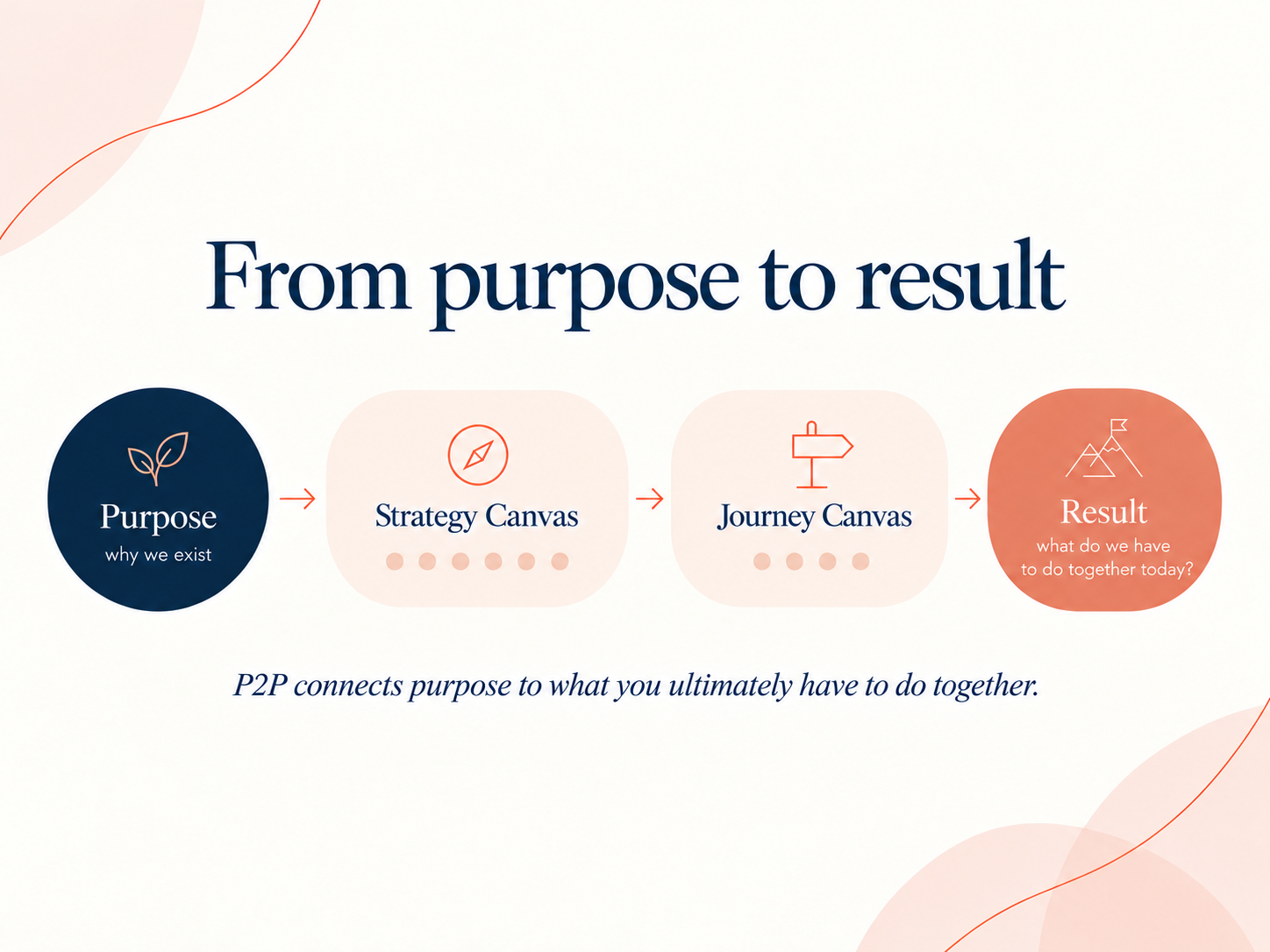
Purpose becomes meaningful when it is translated into choices and, ultimately, into what people need to do together today. For that, we use P2P – Purpose to Performance.
How it carries through
Direction must also shape the work
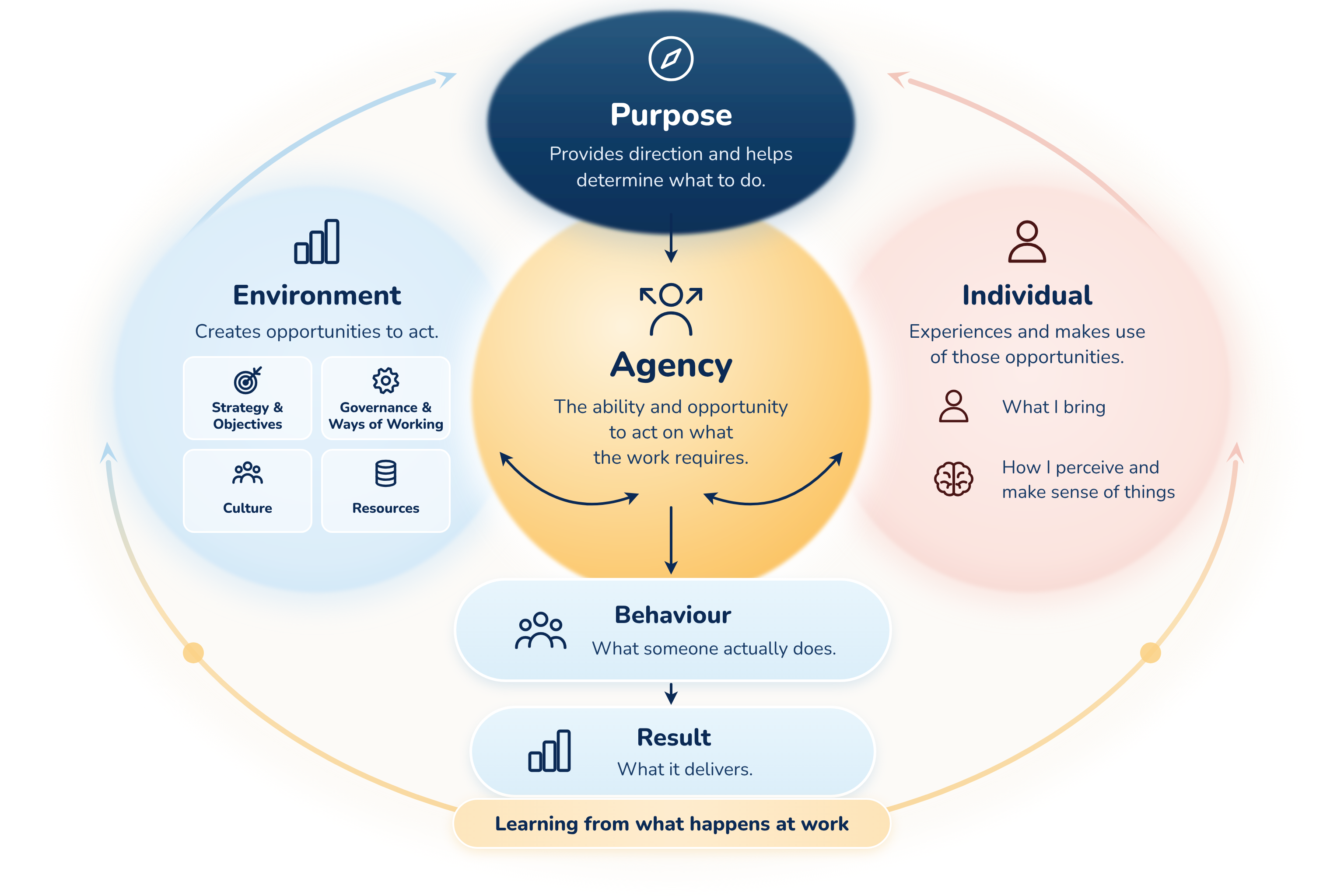
Purpose gives direction to the environment in which people do their work. Strategy & objectives, Organisation and Culture help determine how much room there is to do what is needed.
Explore together
When not everything is agreed in advance, do people know what is needed here?
A clear purpose makes that question answerable together.
engage@humanize7.com